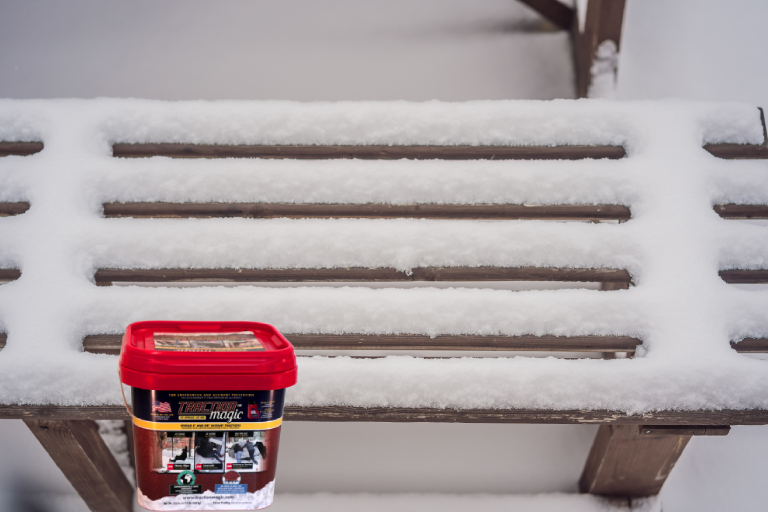
When winter's icy clutches tighten, the innocuous act of traversing steps can become a perilous endeavor. Amidst the snow-laden path, the query arises: what to put on steps for ice? As options abound, the importance of the right choice escalates. In this pursuit, Traction Magic emerges as a transformative solution that redefines safety on icy steps.
https://youtu.be/M1AKY2QK4Ns?t=43
When winter's icy clutches tighten, the innocuous act of traversing steps can become a perilous endeavor. Amidst the snow-laden path, the query arises: what to put on steps for ice? As options abound, the importance of the right choice escalates. In this pursuit, Traction Magic emerges as a transformative solution that redefines safety on icy steps.
The Plight Of Icy Steps: A Battle For Safety
In the symphony of winter, steps often metamorphose into treacherous terrains. These innocuous pathways, laden with frost's icy touch, become a challenge in themselves. The routine task of stepping across them can evolve into a cautious dance, a gamble where safety is at stake.
Traditional Choices Analyzed: Salt And Sand
Traditionally, two contenders have been in the spotlight when it comes to combating icy steps—salt and sand. Salt, what can be used as deicer, holds the promise of breaking down the ice's grip. However, its efficacy might not always match its allure. It takes time to melt ice leaving the surface slippery. It raises the question: Does salt truly deliver on its promise of rendering steps safe?
On the other hand, sand, often used for its traction-enhancing properties, grapples with its own limitations. While it seeks to provide grip, it can falter in maintaining its hold on icy surfaces. The initial traction it offers might be overshadowed by its subsequent impact.
Negatives Revealed: The Downsides Of Salt And Sand
As the allure of salt's melting power is considered, its downsides come into focus. While it may effectively melt ice, it also carries the potential to corrode metals, wreak havoc on vegetation, and find its way into water bodies. The aftermath of its de-icing performance extends beyond the immediate surroundings.
Meanwhile, sand's dual nature emerges—a temporary solution with lasting consequences. Its gritty texture, aimed at granting traction, can leave trails of residue indoors, outdoors, and even within vehicles. The grip it offers is often marred by the mess it leaves behind.
So, What To Put On Steps For Ice?
Amidst this intricate landscape, a revolutionary solution rises to the occasion—Traction Magic. This isn't just another addition to the array of deicers and traction agents. Instead, it's an instant grip provider, a safety-enhancing measure that transcends the boundaries set by traditional choices.
Unlike salt and sand, Traction Magic's influence doesn't end with its primary function. It offers more than just a grip—it provides immediate traction without the corrosive aftermath of salt or the gritty residue of sand. It redefines the very essence of safety on icy steps.
Environmental Harmony: Traction Magic's Ethical Advantage
As the discourse extends beyond effectiveness, the environmental aspect demands attention. While salt and sand can cast shadows of environmental concern due to their potential long-term impact, Traction Magic shines differently. Comprising natural elements, it aligns seamlessly with eco-conscious choices.
Conclusion: Elevating Safety With Traction Magic
The journey to determine what to put on steps for ice culminates in the spotlight cast upon Traction Magic. This is not merely a choice of convenience—it's an investment in safety, environment, and peace of mind. In the perpetual duel of effectiveness, environmental impact, and residue, Traction Magic emerges as the ultimate victor. It offers instant grip without the pitfalls of salt's corrosion or sand's messiness, bringing forth a new era of secure passage on icy steps.
https://tractionmagic.com/?p=3203


Comments
Post a Comment